Amazon Pledges $1 Billion to US Data Center Communities
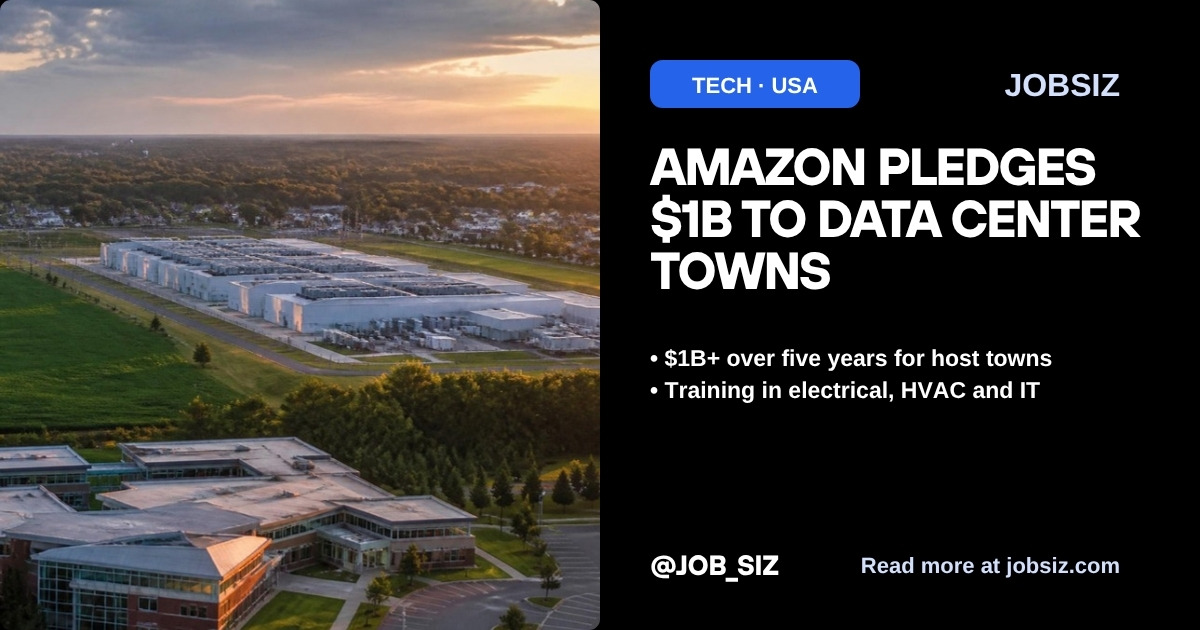
Quick answer: Amazon Web Services announced on Friday, October 2, 2026, that it will put more than $1 billion over five years into U.S. communities where it builds data centers. The money will fund community college and vocational training, energy and water efficiency grants, and local projects chosen with residents and officials, on top of existing commitments.
Key Takeaways
Amazon will invest more than $1 billion over five years in communities near its U.S. data centers, in addition to what it already spends.
The program, which Amazon calls Built Together, covers schooling, workforce training, lower energy bills, water and power conservation, and other local needs.
Planned training includes community college courses and vocational programs in electrical engineering, heating and cooling systems, information technology, healthcare and manufacturing.
The pledge arrives as polls show growing opposition to data centers, and as local efforts have blocked dozens of proposed projects nationwide.
AWS CEO Matt Garman said there is urgency to the buildout and that a lapse in U.S. focus could put the country behind, potentially irreparably.
Amazon is putting more than $1 billion on the table for the towns that host its data centers. Amazon Web Services, the company's cloud computing division, announced on Friday that it will add the money over the next five years, on top of its existing commitments, to fund job training, education, energy affordability and water and energy conservation in those communities.
The announcement is aimed at tempering rising opposition to data centers across the United States. Residents and lawmakers have voiced concerns about the facilities' demand for electricity and water, their environmental impact and how close they sit to homes.
What is Amazon promising?
AWS CEO Matt Garman described the effort, which the company calls the Built Together community program, in a blog post. According to Newsweek, Garman said Amazon would add more than $1 billion over five years, with local communities choosing how it is spent among schooling, workforce training, lower energy bills, saving water and power, and other hometown needs.
Amazon outlined three main areas for the money:
Training and education: funding for community college courses and vocational training for people who live near its data centers.
Efficiency grants: money for energy and water improvements in homes, schools and public buildings, covering upgrades such as insulation, new heating, battery storage and solar panels.
Local projects: funding for priorities chosen together with local officials, nonprofit groups and residents.
Which jobs will the training target?
For workers, the training piece is the most concrete part of the plan. Newsweek reported that the qualifications Amazon intends to back include electrical engineering, HVAC (heating and cooling), IT, healthcare and manufacturing.
Coverage of the announcement so far does not list participating colleges, program sizes or start dates. Garman said communities will be "in the driver's seat" in deciding what is most useful for them.
Why are data centers facing backlash?
Data centers are buildings full of servers that store and process large amounts of data and supply the computing power behind services such as AI systems. Their equipment can use a lot of electricity, and some sites draw heavily on water to keep servers cool, the Congressional Research Service has noted, as cited by Newsweek.
Public opinion has been moving against them. In a recent CBS News poll, opponents of local data centers outnumbered supporters, with many respondents saying they see the facilities as harming the environment and straining local resources. Pew Research reported in September that 54% of Americans now view data centers as mostly harmful to the environment, compared with 39% in January, and half think they mostly hurt home energy bills. Gallup polling from May put local opposition to new AI data centers at seven in 10 Americans.
That opposition is having an effect. Environment America, a network of environmental groups, says local efforts have stopped at least 45 data center developments across 27 states, worth a combined $68 billion, according to CBS News. Data Center Watch, which tracks the issue, says 30 states have proposed or passed laws, or acted in other ways, to address concerns, and some communities have imposed moratoriums before any builder proposed a site.
How big is the energy question?
Demand is growing quickly. The number of U.S. data centers almost doubled from 2021 to 2024, Environment America says. Research by the Electric Power Research Institute estimates an AI search consumes about ten times the power of a regular web search, CBS News reported, and Schneider Electric projects that U.S. electricity demand will increase by 2029, mainly because of the spread of data centers.
Garman pushed back on several common criticisms, including claims that data centers raise power rates, use vast amounts of water, pollute heavily and offer little to nearby communities. Amazon called those claims myths, Newsweek reported.
What is the AI race argument?
Garman tied the pledge to global competition. In his post, quoted by CBS News, he said there is urgency to the buildout because other countries also see AI's benefits for the economy and national security, and that a lapse in U.S. focus could leave the country behind, potentially for good. He also claimed foreign nations could be intentionally spreading misinformation about data centers to slow the U.S. down.
The announcement followed a Tuesday White House meeting attended by President Donald Trump and technology executives, including Amazon founder Jeff Bezos, according to Newsweek. Trump has backed data center expansion amid AI competition with China, writing in an August Truth Social post that communities rejecting data centers risk ending up "backwards and poor."
What happens next?
Amazon says communities will help steer how the money is used, so the next step is local: officials, nonprofits and residents in data center areas working with the company on specific projects. The company has not detailed in reported coverage how the $1 billion will be divided among locations or how quickly it will be spent within the five-year window.
What this means for you
If you live near an existing or planned Amazon data center, keep an eye on announcements from your local community college, workforce board and city government. Amazon says the training money is meant for residents near its data centers, in fields including electrical engineering, HVAC, information technology, healthcare and manufacturing, so local programs are the place to look once details are released.
Amazon also says it will provide grants for energy and water efficiency improvements in homes, schools and public buildings. Because communities are supposed to help choose projects, residents who want a say can follow local government meetings and nonprofit groups working with the company. For job seekers anywhere, the named fields show where Amazon is choosing to put training dollars as its data center network grows.
Frequently Asked Questions
How much is Amazon investing in data center communities?
Amazon said it will put in more than $1 billion during the coming five years. The money is in addition to commitments the company had already made in those communities.
What will Amazon's $1 billion pay for?
It will support schooling and workforce training, lower energy bills, water and power conservation, and other local needs. That includes community college and vocational courses, efficiency grants for homes, schools and public buildings, and projects picked with local residents.
What kind of job training is included?
Amazon named electrical engineering, HVAC, information technology, healthcare and manufacturing as target fields. It will fund community college courses and vocational training for residents near its data centers.
Why are some communities opposing data centers?
Many residents worry about the facilities' electricity and water use, environmental effects and closeness to homes. A CBS News poll found more Americans oppose than favor data centers in their areas, Gallup found seven in 10 oppose local AI data centers, and Pew found 54% see them as mostly bad for the environment.
What is Amazon's Built Together program?
Built Together is the name of Amazon's new community program for areas that host its data centers. AWS CEO Matt Garman said communities will be in the driver's seat in deciding what is most useful to them.
Sources
Published October 2, 2026. This article was compiled from the sources listed above with AI-assisted writing and automated fact-checking. We update stories when new verified information becomes available.