Nursing Jobs in Botswana (2026): New Posts, Registration and How to Apply
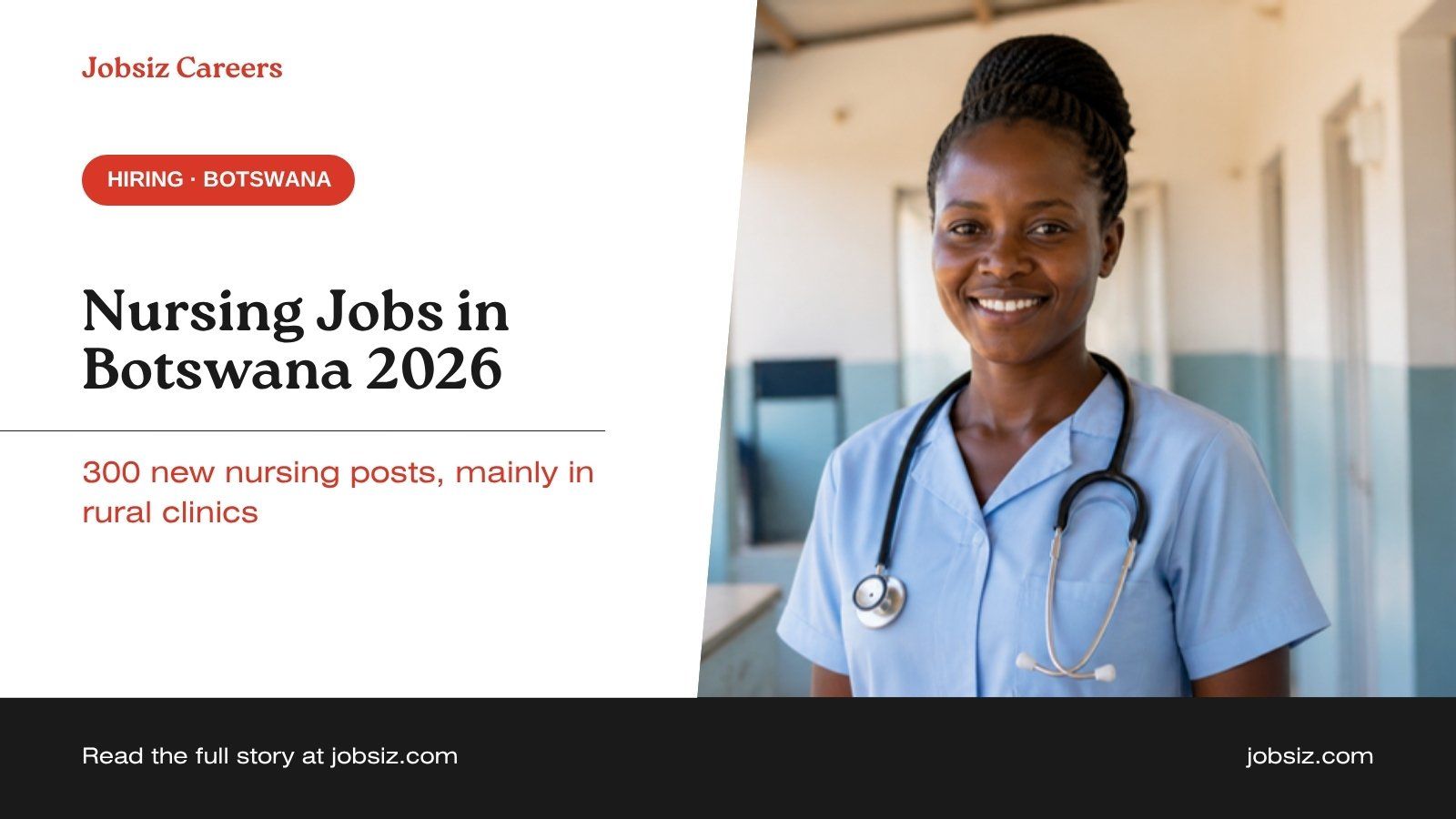
Nursing jobs in Botswana are mostly in the public health system, and demand is real: the Ministry of Health has created 300 new nursing posts aimed mainly at rural hospitals and clinics. To be hired you must be registered with the Nursing and Midwifery Council of Botswana and hold a current practising certificate, then apply through official Ministry of Health vacancy circulars or directly to private hospitals, universities and NGOs. Genuine employers never ask for a fee to apply.
Why nurses are in demand in Botswana right now
Botswana's public health service is short of nurses. According to Statistics Botswana figures reported by the Sunday Standard in October 2026, the number of public-sector nurses dropped to 7,620 in 2024, down from 8,948 three years earlier. Over the same period the combined density of doctors and nurses fell from 42 to 35 per 10,000 people.
The government has responded in two ways that matter for job seekers:
300 new nursing posts: announced by the Ministry of Health in July 2026, with most of the new nurses to be deployed to rural hospitals and clinics where shortages are worst. The Ministry also said the posts would create jobs for unemployed nursing graduates.
97 specialist medical posts: created shortly before the nursing announcement, which the Ministry said it was working to fill.
The government is also working towards a National Health Insurance system, which is expected to increase the need for frontline clinical staff over time.
Who can work as a nurse in Botswana
Nursing is a regulated profession under the Nurses and Midwives Act (Cap. 61:03). The key rules are:
Registration is compulsory. You may not practise as a nurse, midwife or enrolled nurse unless your name is on the correct register kept by the Nursing and Midwifery Council of Botswana (section 10).
You need a current practising certificate. Certificates run from 1 January to 31 December, and you have 30 days after expiry to renew.
Employers are liable too. It is an offence to knowingly employ someone as a nurse without a valid practising certificate, so every legitimate employer will check your registration.
Separate registers exist for general nurses, midwives, nurse specialists, enrolled nurses and student nurses and midwives, so make sure you are registered in the category of the job you apply for.
If you trained outside Botswana, expect to submit certified copies of your qualifications, your current licence and a recent certificate of good standing from your previous regulator. Confirm the current requirements and fees directly with the Council or the Ministry of Health before you apply, as procedures can change.
Where nursing vacancies are advertised
Ministry of Health (public hospitals and clinics)
The Ministry of Health is the largest employer of nurses. It advertises posts through numbered vacancy circulars that state the job title, salary scale, number of posts, duty stations, requirements and closing date. Look for these on official government channels such as the Ministry's website, the Government of Botswana portal and the Daily News.
Other employers
Private hospitals and clinics in Gaborone, Francistown and other towns
University and college clinics (for example, the University of Botswana recruits staff nurses for its clinic)
Mining companies with on-site medical services
NGOs and donor-funded health programmes
You can also browse current openings on nurse jobs in Botswana and the wider healthcare jobs section on Jobsiz.
How to apply for a government nursing job: step by step
Get registered first. Make sure your Council registration and practising certificate are current for the year. An expired certificate can disqualify you.
Read the vacancy circular carefully. Note the reference number, the grade, the minimum qualification and experience, and the closing date.
Prepare your documents. Usually a cover letter quoting the reference number, a CV, certified copies of your Omang (or passport for non-citizens), qualification certificates, registration certificate and current practising certificate, plus references.
Submit exactly as instructed. Use the address, email or portal stated in the advert and apply before the closing date. Late or incomplete applications are normally not considered.
Prepare for shortlisting. Only shortlisted candidates are usually contacted. Expect an interview and, for some posts, verification of your documents.
Career progression and pay
Public-sector nurses are paid on the government salary scales, and each vacancy circular states the scale for the post. Progression has been a concern: in December 2024 the then Minister of Health told Parliament that many nurses and midwives had been on the C1 scale for more than ten years, that this was hurting morale, and that the Ministry would advertise 50 D4 posts for them to compete for. He said new nursing structures with more leadership posts were planned for the 2025/26 financial year.
Public service pay for 2026/27 is still under negotiation; see our guide to the Botswana public service salary talks for the latest position.
Tips for newly qualified nurses
Be willing to work in rural areas. The new posts are aimed mainly at rural facilities, so flexibility on duty station improves your chances.
Keep your paperwork ready. Have several certified copies of your documents so you can apply quickly when a circular is published.
Gain experience while you wait. Government youth and graduate schemes can give you workplace experience; see our guide to the Botswana internship programme.
Consider specialising. The Ministry has named shortages of specialised staff, including specialised nurses, as a key challenge.
Avoid recruitment scams
Fake "Ministry of Health recruitment" posts circulate on social media and WhatsApp. Protect yourself:
Never pay anyone to apply, to be shortlisted or to "secure" a post. Government recruitment is free.
Only trust adverts you can trace to an official source such as the Ministry of Health, the Government of Botswana portal (gov.bw) or the Daily News.
Be wary of personal Gmail or WhatsApp contacts claiming to recruit for government hospitals.
Do not send copies of your Omang or certificates to unverified contacts.
Frequently asked questions
How many new nursing posts has Botswana created?
The Ministry of Health announced 300 new nursing posts in July 2026, mainly for rural hospitals and clinics.
Do I need to register to work as a nurse in Botswana?
Yes. Under the Nurses and Midwives Act you must be on the register of the Nursing and Midwifery Council of Botswana and hold a current practising certificate, which is renewed every calendar year.
Where can I find Ministry of Health nursing vacancies?
The Ministry publishes numbered vacancy circulars through official government channels, including its website, the gov.bw portal and the Daily News. Always check the reference number and closing date.
Do I have to pay to apply for a government nursing job?
No. Government recruitment is free. Anyone asking for money to process or guarantee your application is likely a scammer.
Can foreign-trained nurses work in Botswana?
They must register with the Nursing and Midwifery Council and will normally need a work permit. Some public-sector posts are open to citizens only, so check each advert's eligibility rules.
Sources
Channel Africa: Botswana creates 300 new nursing posts (July 2026)
Sunday Standard: Nurse shortfall tests Botswana's universal healthcare ambitions (October 2026)
Daily News (BOPA): Minister aware of officers' stagnation (December 2024)
Looking for your next role? Browse the latest jobs in Botswana on Jobsiz and set up alerts so you never miss a vacancy circular.
By the Jobsiz Editorial Team · Updated 26 October 2026
Spotted an error or out-of-date detail? Report a correction — we review every report. See our editorial policy.