NGO Jobs in Zimbabwe: Where to Find Real Vacancies and How to Apply (2026)
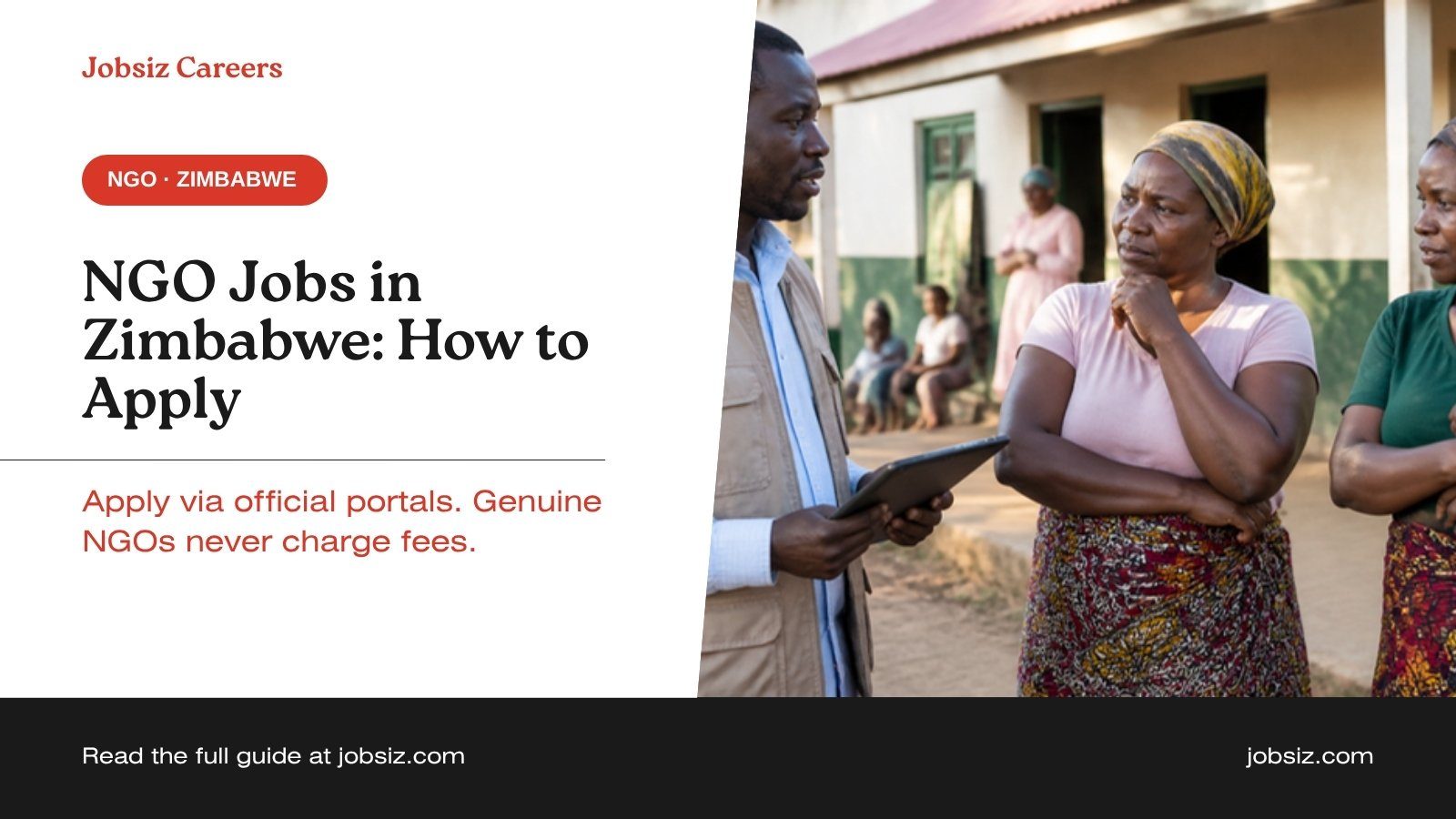
To find genuine NGO jobs in Zimbabwe, apply only through an organisation's own careers portal (for example World Vision's Workday site or Plan International's job board) or a trusted aggregator such as ReliefWeb, and never pay anyone for a job. Most NGO roles in Harare, Bulawayo and the districts are advertised for two to three weeks, need a tailored CV and cover letter, and are filled through shortlisting, a written test or interview, and reference and safeguarding checks.
This guide explains where Zimbabwe's NGO vacancies are posted, how the hiring process works, what has changed in the sector since 2025, and how to avoid fake recruiters.
Where to find real NGO vacancies in Zimbabwe
International NGOs recruit through their own online systems. Start with these official channels:
World Vision – vacancies for all countries are posted on the World Vision International Workday portal. Search "Zimbabwe" on the World Vision portal.
Plan International – country-office jobs, including posts based in Harare, Bulawayo and Chiredzi, appear on jobs.plan-international.org.
CARE – CARE has no single global jobs board; its careers page sends you to each member office's own listings.
ReliefWeb (UN OCHA) – a free humanitarian job board where many international and local NGOs post. Use the Zimbabwe filter on ReliefWeb Jobs.
Jobsiz – browse current jobs in Zimbabwe, including NGO and development roles in Harare and Bulawayo, and set alerts so you see new posts early.
Local NGOs and trusts often advertise in national newspapers, on their own websites and on their official social media pages. If an advert appears only on a WhatsApp forward, find the same post on the organisation's own site before applying.
Looking for UN agencies rather than NGOs? See our separate guide to UN jobs in Zimbabwe.
Common NGO job types
NGO teams in Zimbabwe tend to cover health, nutrition, child protection, education, livelihoods, water and sanitation, and emergency response. Typical roles include:
Programme and project roles – project officers, field facilitators and programme managers who run activities in communities.
Monitoring, evaluation and learning (MEAL/MERL) – data collection, reporting and impact measurement.
Finance, grants and compliance – accountants, grants officers and auditors who manage donor funds.
Operations and support – procurement, logistics, administration, HR and drivers.
Health and technical specialists – nurses, nutritionists, engineers and child-protection or safeguarding specialists.
Graduate internships – some NGOs run paid graduate internships in areas such as administration, procurement and HR. Compare them with our list of graduate trainee programmes in Zimbabwe.
Many NGO contracts are fixed-term and tied to a donor-funded project, so check the contract length in the advert before you apply.
How to apply for an NGO job: step by step
Read the full job description. Note the essential qualifications, years of experience, duty station and closing date. Apply only where you meet the essential criteria.
Create an account on the official portal. International NGOs usually require an online profile; emailed CVs may not be considered when an advert says "apply online".
Tailor your CV. Mirror the job's key responsibilities with your own results – for example, number of households reached, budgets managed or reports delivered. Our guide on how to write a resume and the free Jobsiz resume builder can help.
Write a short cover letter. Explain why you want that organisation and that programme, and give one or two concrete examples. See our cover letter examples.
Prepare referees. NGOs normally contact previous supervisors. Choose people who can speak about your recent work and tell them to expect a call.
Submit before the deadline. Portals often close at midnight in the organisation's time zone, so do not leave it to the last day.
Prepare for assessment. Shortlisted candidates may face a written or practical test (for example a report, budget or data exercise) followed by a panel interview.
Expect safeguarding and background checks. Organisations that work with children and vulnerable adults carry out reference and conduct checks before confirming an offer.
What has changed in Zimbabwe's NGO sector since 2025
Two developments affect job seekers:
US aid cuts. The US funding freeze in early 2025 closed some donor-funded HIV clinics in Zimbabwe at the end of January 2025, and health workers employed by NGOs lost their jobs, NewsDay reported. When you assess an offer, ask how the project is funded and how long the funding runs.
New registration rules. The Private Voluntary Organisations (PVO) Amendment Act took effect on 11 April 2025. It created an Office of the Registrar of PVOs under the Ministry of Public Service, Labour and Social Welfare, and bars unregistered organisations from operating, according to the International Center for Not-for-Profit Law (ICNL). Before you accept a job, it is reasonable to check that the organisation is properly registered.
How to spot fake NGO recruitment
Fraudsters often use the names of well-known NGOs. World Vision, for example, states that it never asks for money at any stage of recruitment, including shortlisting, interviews, background checks or medical check-ups, and warns that some agencies and individuals falsely claim to recruit on its behalf (World Vision careers notice). Watch for these red flags:
Any request for an "application", "processing", training, medical or uniform fee.
Offers made without an interview, or interviews held only over WhatsApp.
Emails from free webmail addresses instead of the organisation's own domain.
Adverts you cannot find on the organisation's official website or portal.
Pressure to decide or pay "today" to secure a place.
If something looks wrong, contact the NGO directly using details from its official website, and report suspected fraud to the Zimbabwe Republic Police.
Frequently asked questions
Where are NGO jobs in Zimbabwe advertised?
On each organisation's official careers portal (such as World Vision's Workday site or Plan International's job board), on ReliefWeb Jobs, in national newspapers and on trusted job sites such as Jobsiz.
Do I have to pay to apply for an NGO job?
No. Genuine NGOs do not charge application, interview or medical fees. A request for payment is a strong sign of a scam.
Can graduates without experience get NGO jobs in Zimbabwe?
Yes, mainly through graduate internships, volunteer roles and entry-level posts such as field assistant or data clerk. Most officer-level posts ask for two or more years of relevant experience.
Are NGO jobs in Zimbabwe permanent?
Many are fixed-term contracts linked to donor-funded projects. Check the contract length and ask about funding before accepting an offer.
How long does NGO recruitment take?
It varies by organisation, but expect several weeks between the closing date and an offer, because shortlisting, tests, interviews and reference checks all take time. Usually only shortlisted candidates are contacted.
Next steps
Update your CV, set up profiles on the official NGO portals above, and check the latest jobs in Zimbabwe on Jobsiz regularly so you can apply early.
Sources
Spotted an error or out-of-date detail? Report a correction — we review every report. See our editorial policy.